From the Editor · Issue One
Three Days in Barcelona
A dispatch from the Padel World Summit, and what it told me about the publication you are holding.
Andy Galt
From the Editor
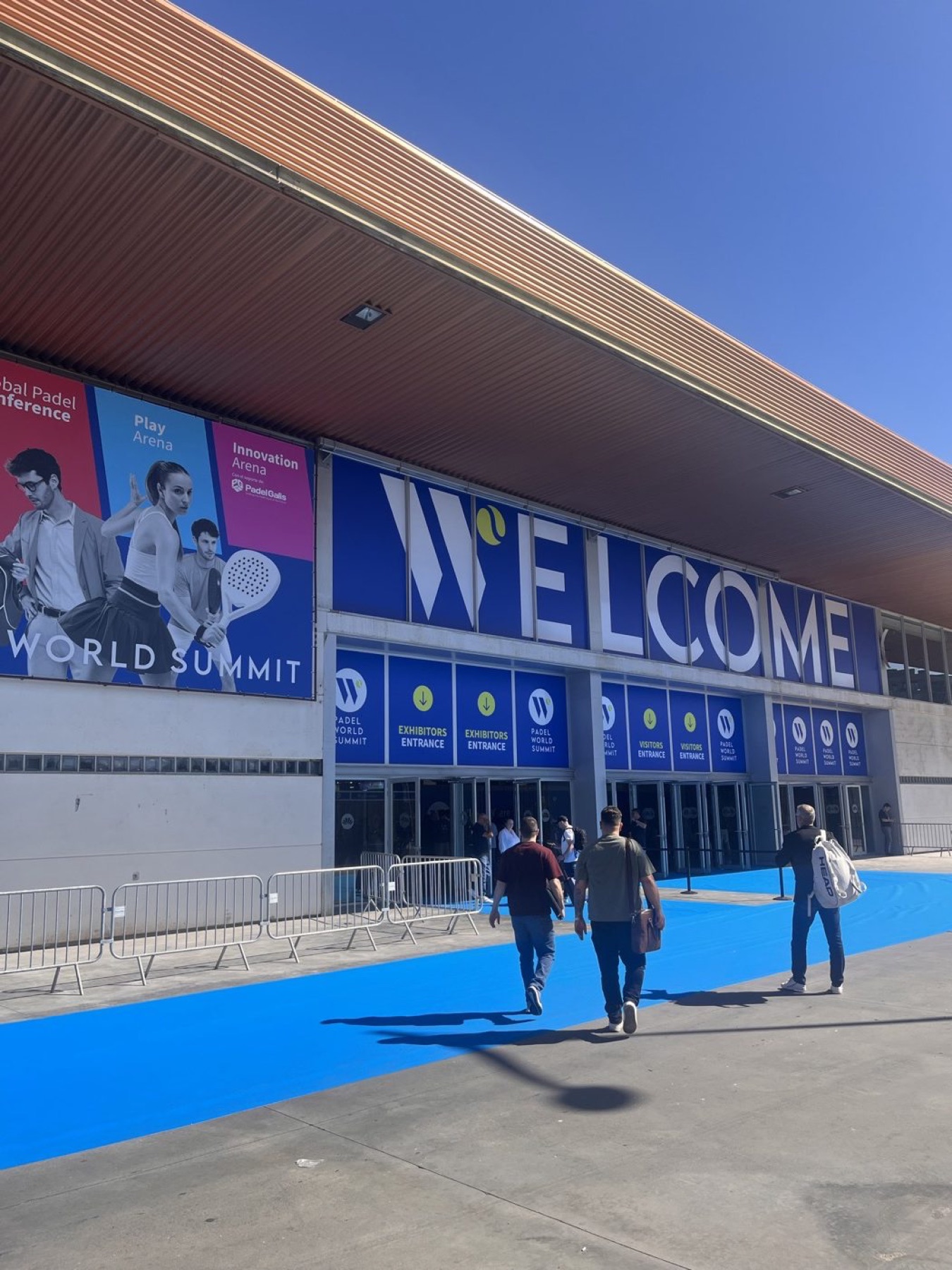
They say a picture is worth a thousand words, which is a generous rate for a magazine that trades in words. Still, I can think of no better way to welcome you to this first issue of The Alborán than the welcome Alex and I were given ourselves, in May, walking into the Padel World Summit in Barcelona: a wall the size of a building, and on it a single word. The word was welcome. Consider it extended to you.
So before you read a page of this, the first issue, here is what The Alborán is and is not. It is a publication about padel and the life the game has gathered around itself: the clubs, the coast roads, the two hours on a terrace after the last point. About two parts in five are the sport. We write all of it ourselves, every page. Nothing here was written by the company it describes, nothing traded for access, nothing placed because a brand paid to place it. You will find no products in these pages, no offers, no links at the foot of a page.
We refuse the advertorial dressed as a feature. The people we cover do not write their own coverage. We will not sell you anything while claiming to inform you. Hold us to it.
One disclosure, because transparency is the whole of the point. I am a co-founder of PISTA 74, a padel brand. It has no part in this publication: it does not own it, does not fund its judgements, and does not appear in its pages. I tell you here, once, because a magazine that asks for transparency owes it first. You will not find the name again.
The Summit, then. Alex and I spent three days in that convention hall in Barcelona, which is where the sport now goes to look at itself. You could stand in one place and see most of it at once: the stands, the court demos, the talks running back to back on a stage at one end, the corridors where the actual business gets done.
On that stage, Playtomic, the company whose software runs a great deal of the sport's booking, put up a map of the world's markets and teased its new report; that report is the subject of a piece a few pages on. On the floor were the makers. A Valencian brand called Bonabola, handing round ultralight rackets built to order. Clutch, whose courtside cameras had a rating waiting for players before they had packed up their bags. Preserva, who had decided the ball was worth rethinking. Infinite Athletic, making kit out of what the sport throws away. In a quieter room, a Mexican notary named Ignacio Soto Borja, author of a book called the official history of padel, who was introduced as one of its co-founders, and whose story is one for another issue. And the people who map it for a living: George Modler, who opens our first Sessions, and Jethro Binns of PadelLevels, who will, I suspect, open a later one.
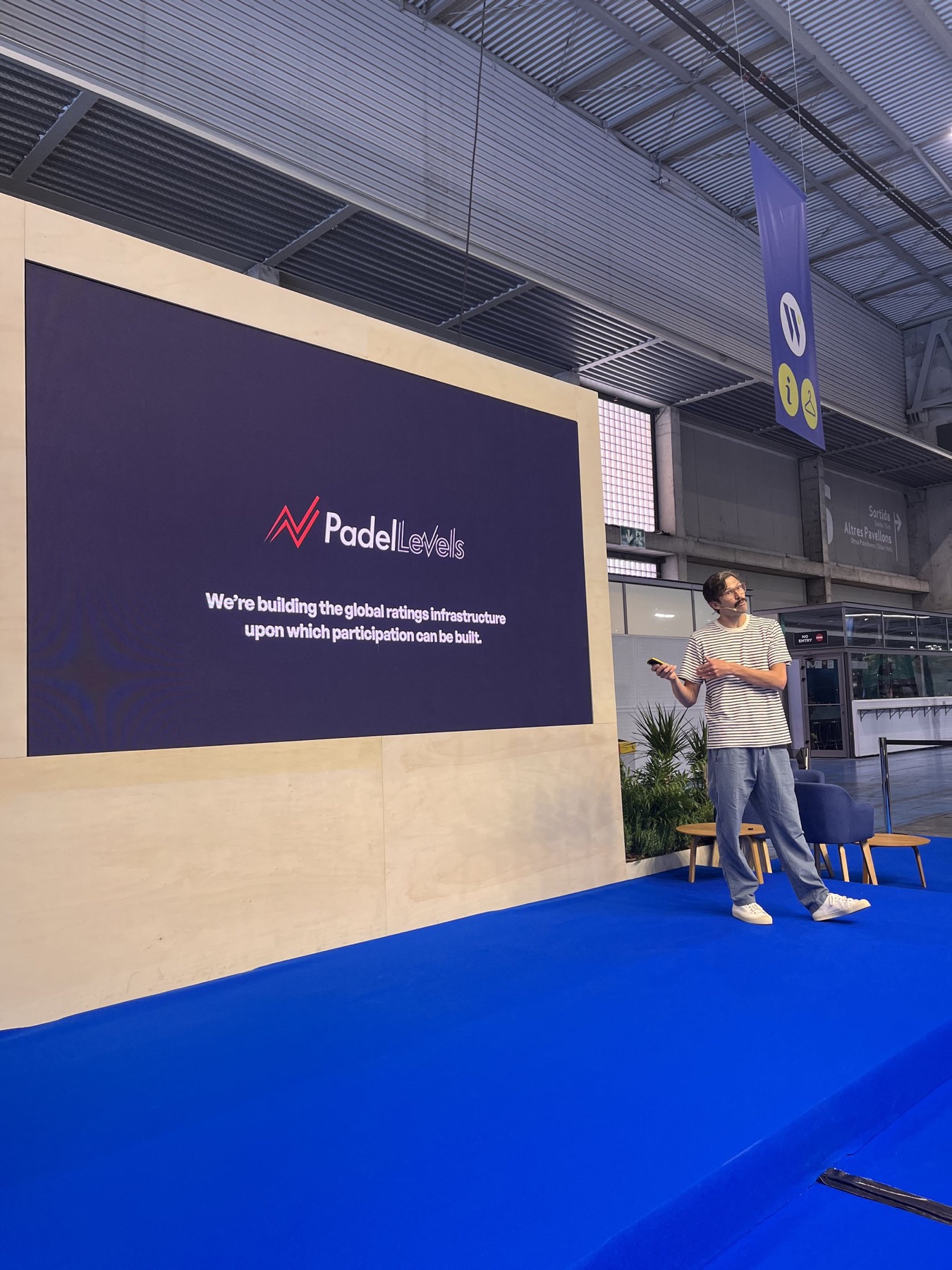
I came away with two thoughts. The first is that padel has grown up: there is real money in it now, and real engineering behind the rackets. The second is quieter, and it is the reason this publication exists. Almost everything in that hall was for sale. What I could not find much of was anyone simply telling you about the game.
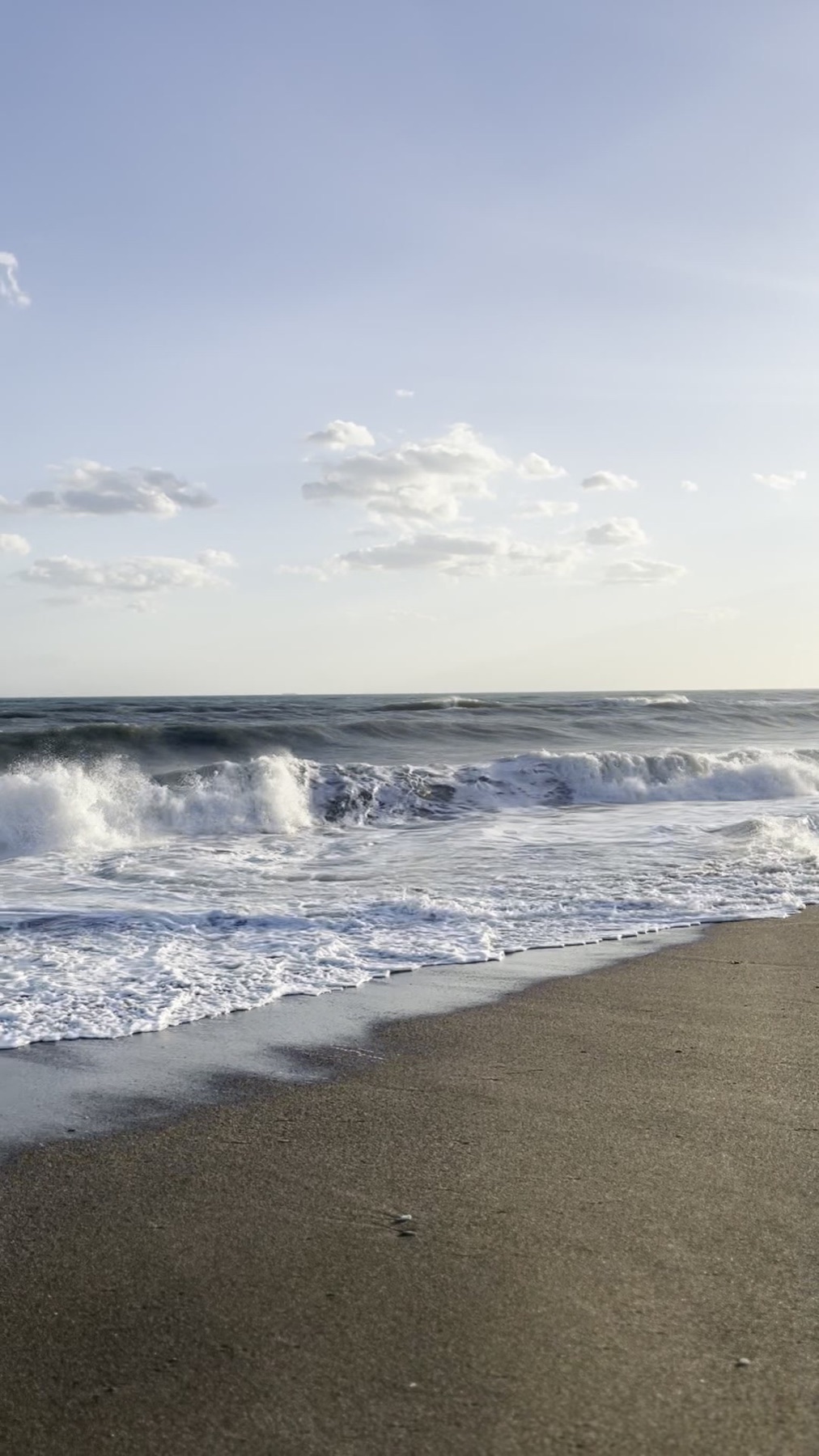
The name is older than the magazine. The Alborán Sea runs between the south of Spain and the coast of Morocco, the last open water before the Mediterranean tightens into the Atlantic. My wife, Ana, is from Málaga, which sits on it. She put a racket in my hand, and she showed me that the game arrived with everything around it: the long lunch after, and a Spanish instinct for treating leisure as serious work. The game and the life reached me together, through her.
The idea came later, and somewhere improbable. Earlier this year Ana and I stayed on Gili Air, a small island off Lombok with no cars on it, in a villa that happened to be called the Alborán: the same sea, the same accent on the á, half a world away. I am not a man much given to signs. I took that one. Alex had been the missing piece for a while: a podcast wants a host whose love of the game runs deeper than the editor's, and his does. On that island, with a court at the end of a sand lane, the whole thing arrived at once: the publication, the Sessions, and a name that had been waiting, it seemed, for me to notice it.
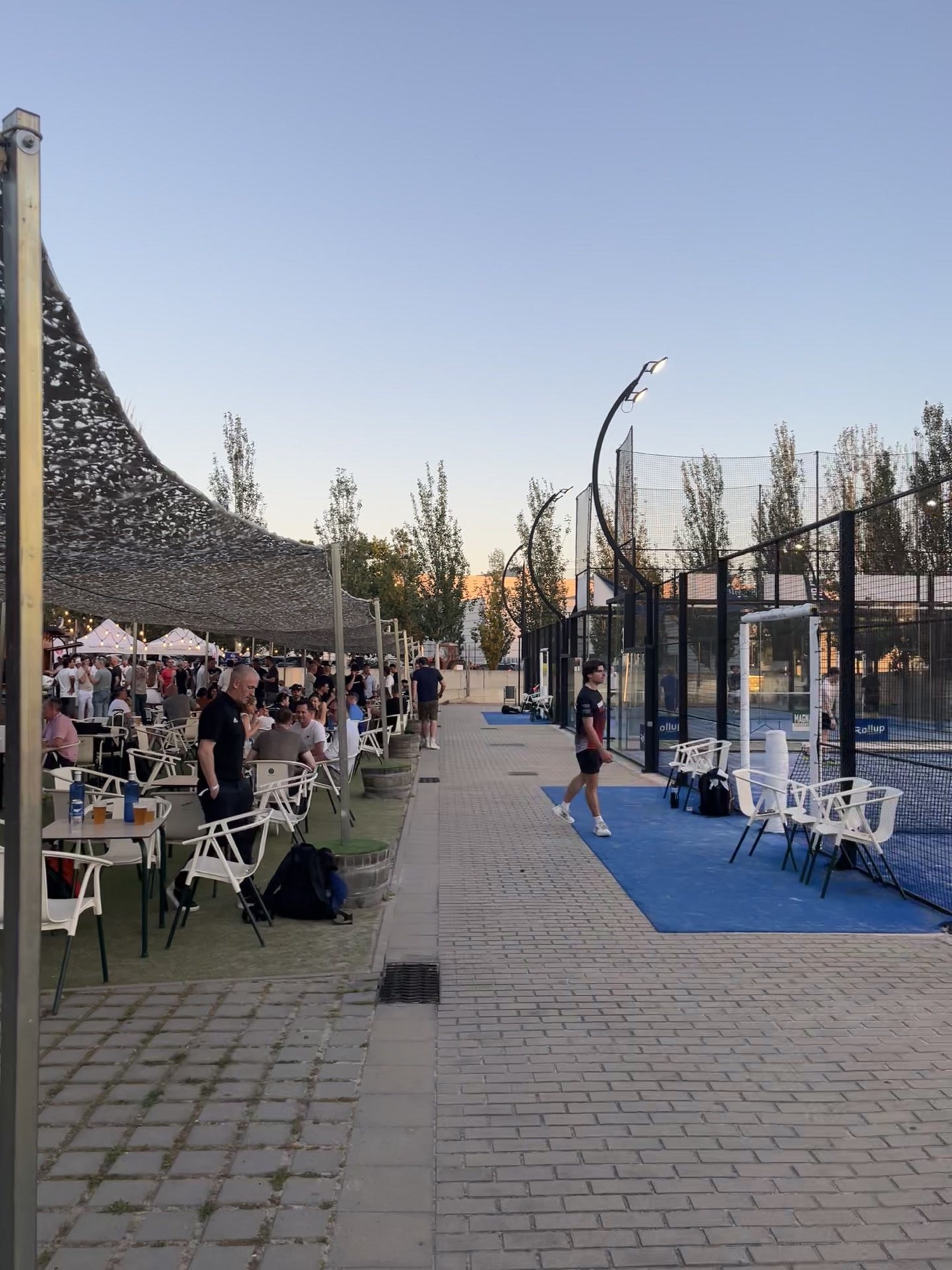
That is the hour we write for. Not the match, quite, but the one after it: four players on a terrace somewhere, taking apart the game they have just finished and half-watching the next pair walk on. We went to Barcelona to see where the sport was going, and came back to write about that.
See you at the club.
Andy Galt, Editor